☯ Concept Cartoons ☯
Table of Contents
1 Chemistry Bonding 14 - Is carbon a conductor?
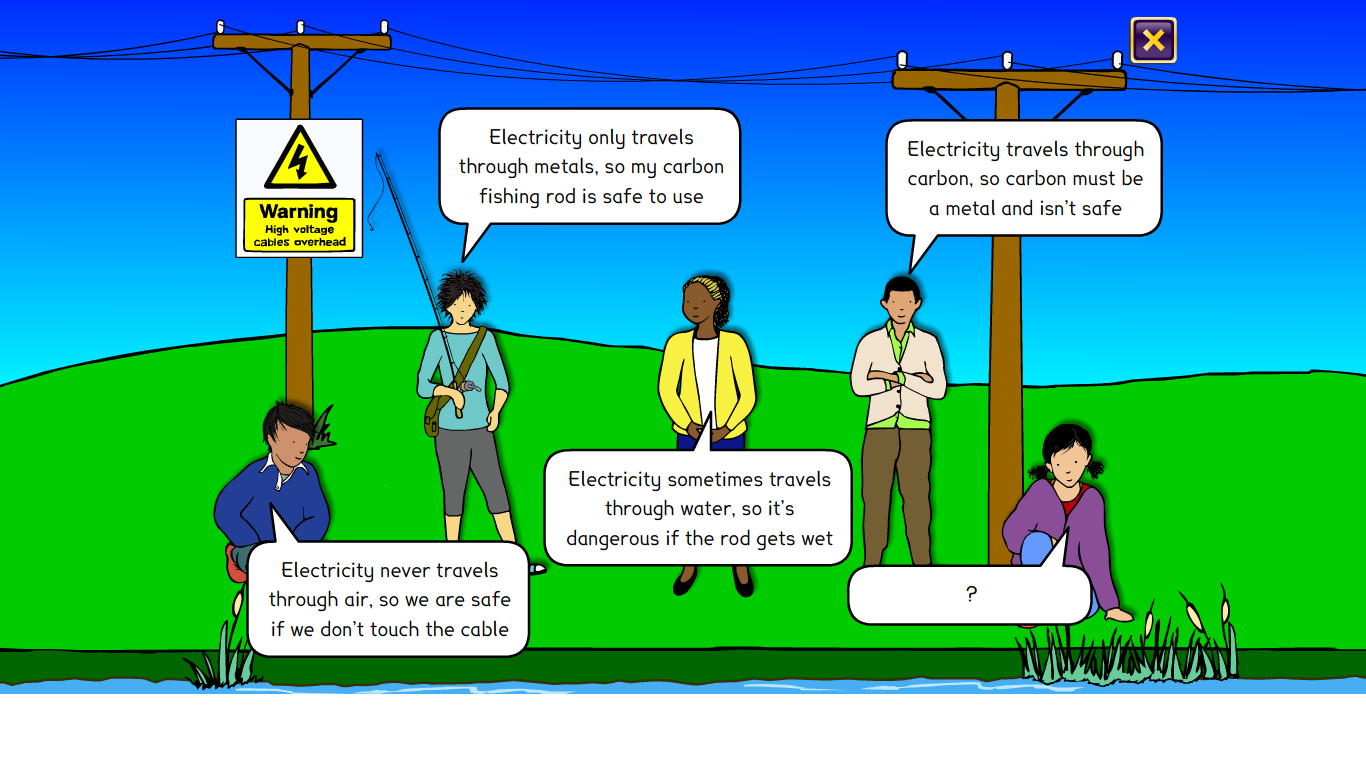
Have you talked about your ideas? Do you agree with any of the characters or do you think something different? Do you all have the same ideas? Here are some ways of finding out more. Set up an investigation to find out which materials conduct electricity. Make sure you try metals, carbon, water and air. Check your results on the internet for whether each of these conducts electricity. In what way is it useful to us to know which materials conduct or don’t conduct electricity?
Here’s what a scientist might say. Did you find any evidence to support or justify these ideas? Are there any questions that you still need to answer? Electricity is the flow of tiny particles called electrons that are part of all atoms. In some materials electrons can move easily, but in others they can’t. The outer electrons in metal atoms are held loosely and can move in the spaces between the atoms. This means that the material can conduct electricity. These electrons are called free electrons. Carbon is not a metal, but most forms of carbon do have free electrons. Carbon conducts electricity, but not as well as a metal. Pure water doesn’t have free electrons and does not conduct electricity. Most water is not pure. If it has impurities such as metal salts dissolved in it, then it conducts electricity. Electricity can travel through the air as a spark or as lightning. If you are close to high voltage cables, carrying a metal-tipped umbrella or a carbon fishing rod, a spark could jump from the cable and you could be electrocuted. Create a safety leaflet to help people understand when electrical conductors can be dangerous and why (for example, playing near railways, or getting toast out of toasters).