☯ Concept Cartoons ☯
Table of Contents
1 Chemistry Nuclear 16 - Energy from nuclear fuel
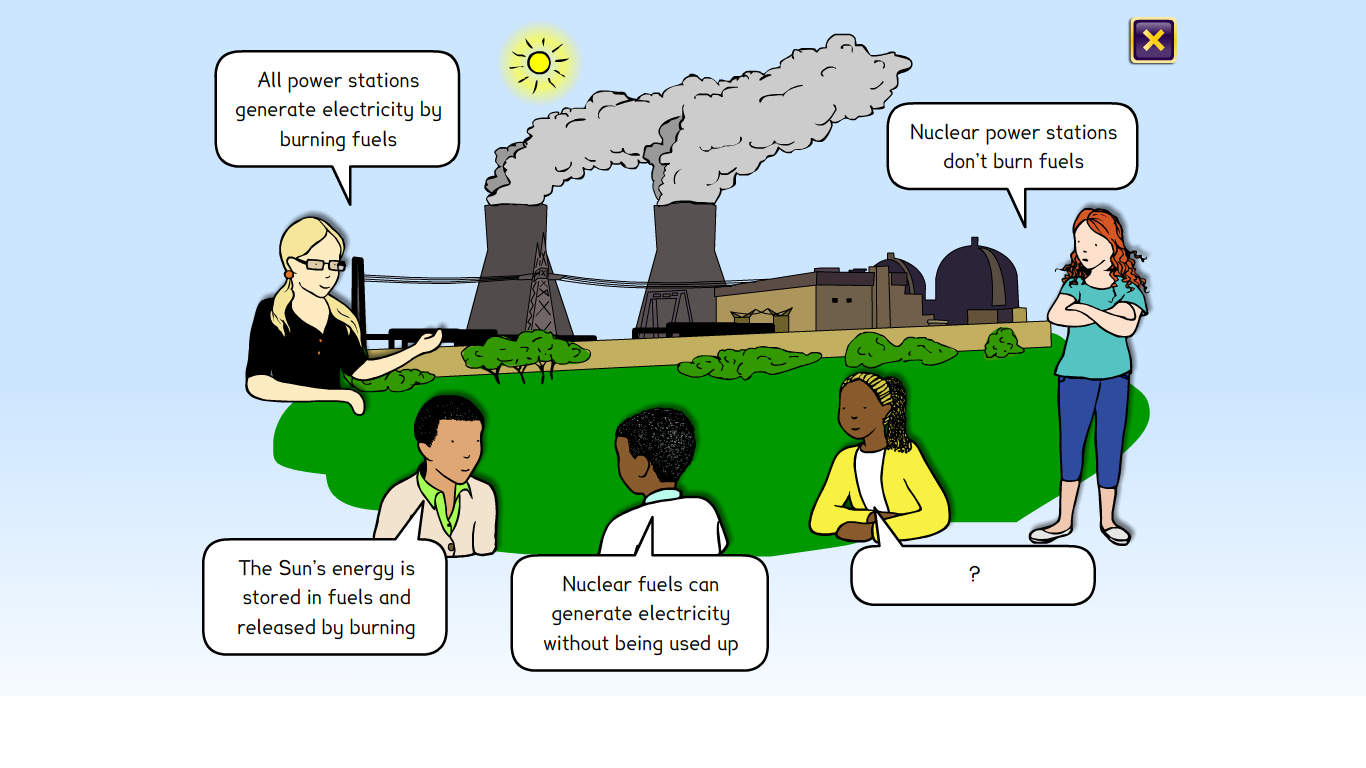
Have you talked about your ideas? Do you agree with any of the characters or do you think something different? Do you all have the same ideas? Here are some ways of finding out more. Use textbooks or the internet to research different methods of generating electricity. Talk about what the source of energy is for each method. Produce an annotated diagram for each method to show the essential stages in generating electricity. How can we get energy from the Sun when it is millions of kilometres away?
Here’s what a scientist might say. Did you find any evidence to support or justify these ideas? Are there any questions that you still need to answer? Most power stations burn fuels to turn water into steam that is used to turn turbines and generate electricity. Nuclear power stations are different. They use nuclear reactions in radioactive materials like uranium or plutonium to generate electricity. Nuclear reactions are not like burning, where chemicals join together to release energy. In a nuclear reaction the structure of some of the atoms is changed and the nuclei of the atoms (made from protons and neutrons) are split into smaller pieces. As they do this they release huge amounts of energy. 1 kg of nuclear fuel can produce the same energy as burning nearly 3 million kg of coal. This energy turns water into steam to drive the turbines. Fossil fuels got their energy from the Sun via plants and animals millions of years ago, but uranium, like lots of the complex elements in the periodic table, was made inside stars at the time of a supernova, long before our Sun was formed. Nuclear power has advantages and disadvantages. Make a table to show what the advantages and disadvantages are.