☯ Concept Cartoons ☯
Table of Contents
1 Chemistry Option A Magnets 10 - Is magnetism used up?
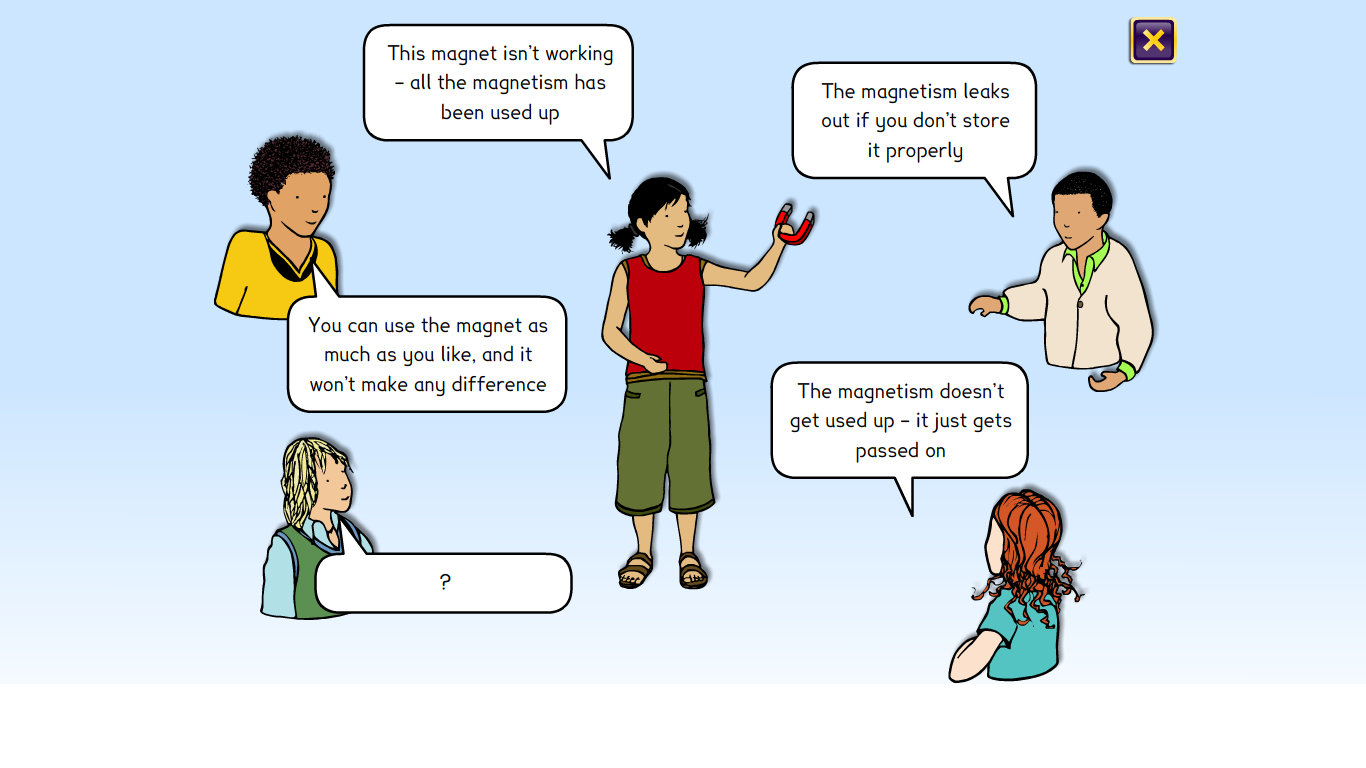
Have you talked about your ideas? Do you agree with any of the characters or do you think something different? Do you all have the same ideas? Here are some ways of finding out more. Magnetise an iron nail by stroking it in one direction with one end of a strong magnet. Find a way to measure how strong your new magnet is. Does the magnet that you started with get weaker when you make a new magnet? Does the number of times you stroke it affect the strength of the new magnet?
Here’s what a scientist might say. Did you find any evidence to support or justify these ideas? Are there any questions that you still need to answer? Magnets are made by placing a magnetic material near a very strong electromagnet. Some materials, such as iron, steel, cobalt and nickel, become magnetic more easily than others. The groups of atoms inside them are like tiny magnets. They line up with the magnetic field of the electromagnet. The magnetism from each group of atoms adds together to make up the magnetism of the whole magnet. A magnet can lose some of its magnetism if the groups of atoms get out of line. This can happen if it is kept near other magnets, gets too hot or is hit or vibrated a lot. You can make a magnet by stroking a piece of steel in the same direction with one end of a permanent magnet. This lines up the groups of atoms in the steel and makes it a weak magnet. The magnetism hasn’t been passed on to the steel and it doesn’t get used up. If modern magnets are kept carefully they will stay magnetic forever. When you buy magnets they often come with ‘keepers’. Find out what these are and draw how you think they might work.