☯ Concept Cartoons ☯
Table of Contents
1 Chemistry Thermochemistry 11 - Temperature change in reactions
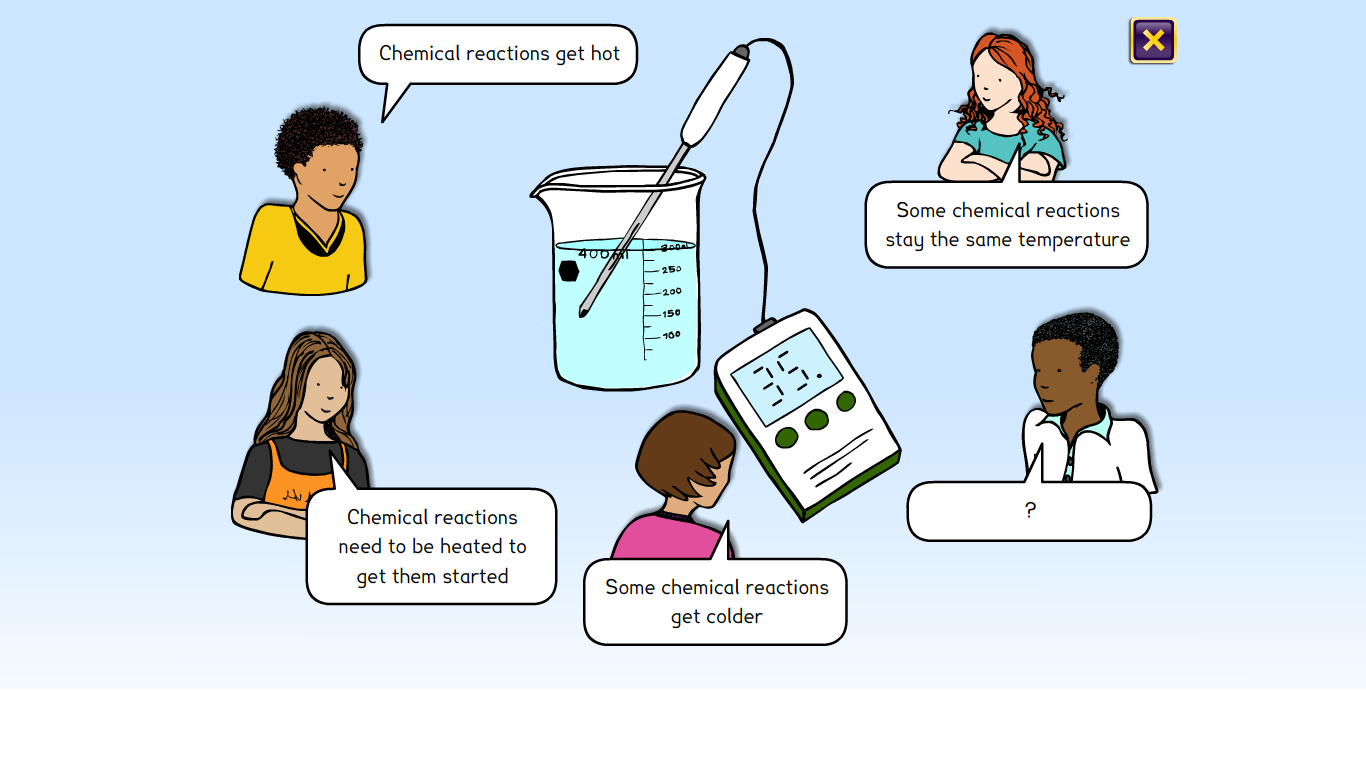
Have you talked about your ideas? Do you agree with any of the characters or do you think something different? Do you all have the same ideas? Here are some ways of finding out more. Talk about some chemical reactions that you have seen. Do any of them get hot or cold? Mix some baking soda with vinegar and record the temperature. Find out whether the temperature changes as they react. Can you explain what is happening? What do you think exothermic and endothermic mean?
Here’s what a scientist might say. Did you find any evidence to support or justify these ideas? Are there any questions that you still need to answer? Chemical reactions involve a change in energy. Some chemical reactions get hot. For example, when something burns, a chemical reaction takes place where oxygen reacts with the fuel and releases energy as the chemicals combine. Putting some metals in acid causes a reaction that gets hot. Some reactions absorb energy. For example, if you react ethanoic acid (vinegar) with sodium hydrogen carbonate (baking soda), the temperature goes down. Energy is removed from the surroundings to make the reaction happen. Some reactions need to be at a high temperature to get started, but then they release energy and keep going by themselves, like burning magnesium. Some reactions don’t involve any noticeable change in temperature. What kinds of energy changes take place in preparing and cooking food? Create a list of examples.