Copper refining: introduction
 Copper
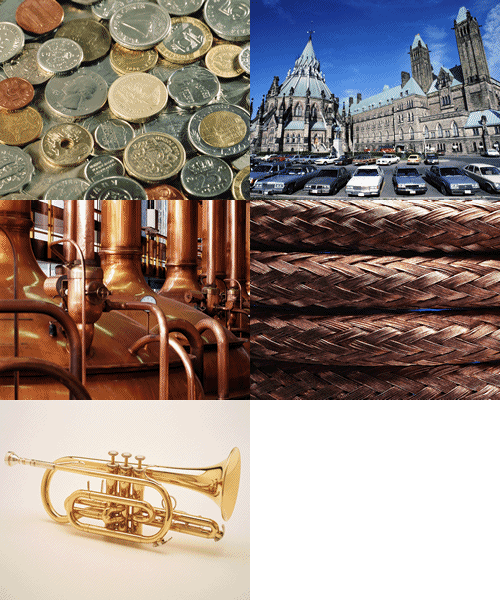
is a strong, unreactive, reddish-brown metal. It is vital to modern life because
it is such a good conductor of heat and electricity. It is used in electrical
wiring and also in plumbing pipes, so you will see it whenever you wire a plug
or have unpainted pipes in your central heating system. It is used to make brass
and to a small extent in jewellery.
Copper
is a strong, unreactive, reddish-brown metal. It is vital to modern life because
it is such a good conductor of heat and electricity. It is used in electrical
wiring and also in plumbing pipes, so you will see it whenever you wire a plug
or have unpainted pipes in your central heating system. It is used to make brass
and to a small extent in jewellery.
Some background
Copper has been used by mankind since as long ago as 8000 BC, which makes it
one of the earliest elements known. Because copper is an unreactive metal,
impure metallic copper is sometimes found uncombined with other elements, in the
form of large boulders. This copper can be purified on site by building a dam
around the boulder, filling the dam with copper sulfate electrolyte, and making
the copper boulder the anode in an electrolysis cell.
Copper refining: fact file
| World production |
15 million tonnes per year (13 million tonnes primary copper, 2
million tonnes from recycling) |
| UK production |
Zero |
| Manufacture |
Electrolytic purification |
| Raw material |
Copper-containing scrap or 'blister copper', which is
impure copper that has been extracted from copper ore. |
 |
Electrical (eg wiring, motors) |
57% |
 |
Construction (eg plumbing, roofing) |
19% |
 |
Industrial machinery (eg heat exchangers) |
17% |
 |
Other (eg coinage) |
7% |
 |
 |
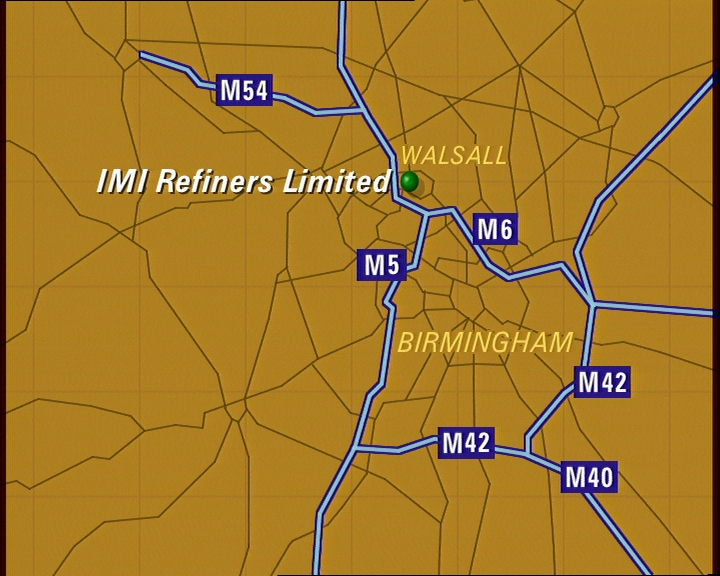
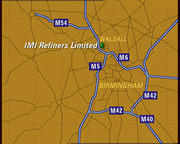
| Map |
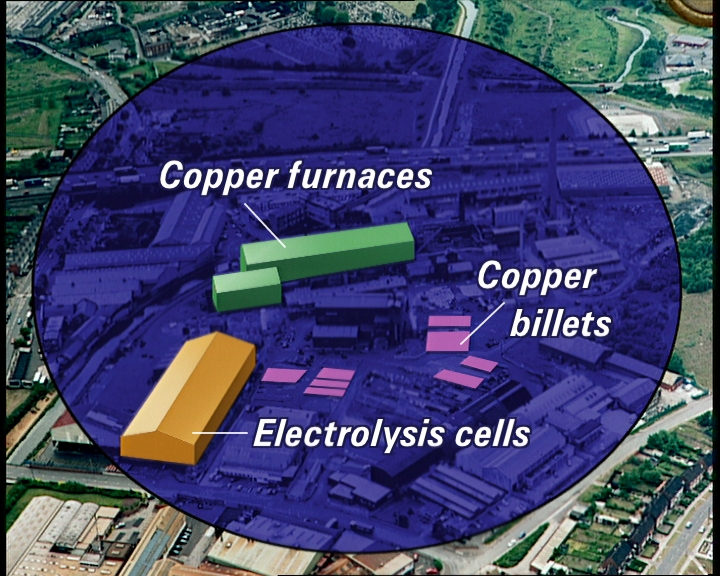
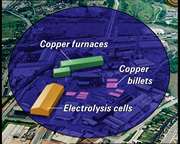
Aerial view of site |
 |
 |
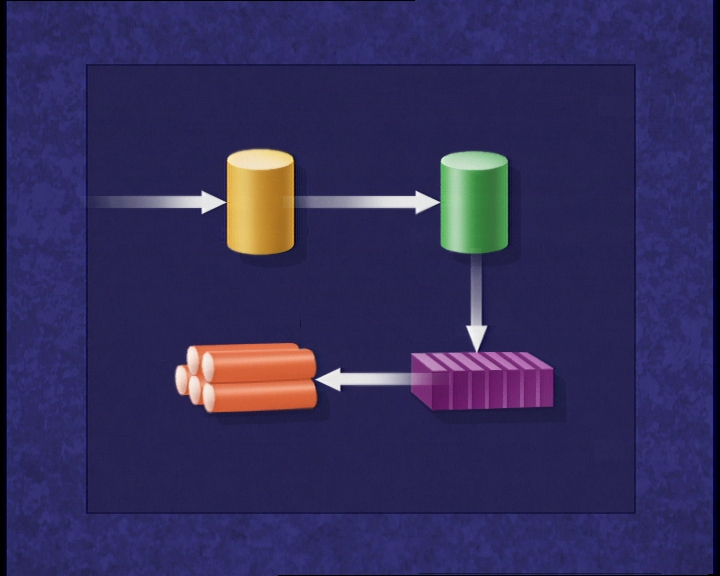
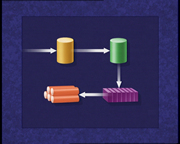
| Unlabelled process diagram |
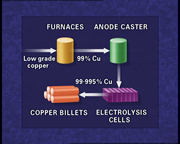
Labelled process diagram |
Copper refining: on the web
last update March 2006