ISSR CLASSES
Checkpoint Science
iGCSE Chemistry
iGCSE Physics
iGCSE Coordinated Science
A-Level Chemistry
PRACTICALS
Practicals Home
Practicals A-Z
Study Plan for Practical Work
You may meet a number of acid-base indicators in your course. I have only shown a few common indicators below. You may be interested in the theory of these indicators. Indicators are available as solutions or pre-soaked into indicator papers.
|
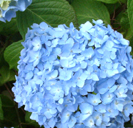
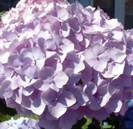
This is probably the first acid-base indicator that you have met. Litmus is a moss which is red in acidic conditions and blue in alkali. Many natural materials behave in this way. You may have seen the hydrangea in a garden. The colour of its flowers depend on the pH of the soil - they are blue in acid and pink in alkali. |
|
|
|
This is actually a mixture of different indicators. Consequently, it has a range of different colours which indicate the approximate pH of the solution being measured. As it does not have a sharp, single colour change, full range indicator is never used for titrations. |
|
This is similar to full range indicator in that it is actually a mixture of indicators. For the same reason, it is never used for titration work.
|
|
A single indicator which changes over the range pH 3.2 - 4.4. It is red in acid and yellow in alkali. It can be used for titrations between strong acids and any base. |
Some people find the end-point of this indicator difficult to judge. You may use screened methyl orange. This has another substance added to make the end-point clearer. This indicator is purple in acid, green in alkali and grey at the end-point.
|
|
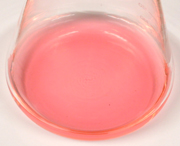
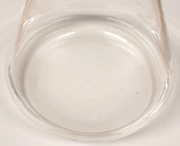
A single indicator which changes over the range pH 8.2 - 10.0. It is colourless in acid and pink in alkali. This is used for titrations between strong bases and any acid. |