ISSR CLASSES
Checkpoint Science
iGCSE Chemistry
iGCSE Physics
iGCSE Coordinated Science
A-Level Chemistry
PRACTICALS
Practicals Home
Practicals A-Z
Study Plan for Practical Work
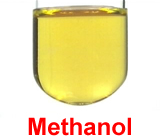
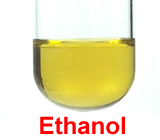
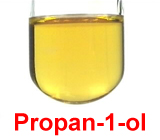
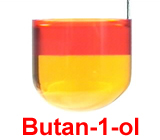
The smaller alcohols (up to propan-1-ol) are soluble in water due to hydrogen bonding between the OH group in the alcohol and the water. The bigger hydrophobic carbon chains in the larger alcohols causes them to be immiscible with water. You will see from the photographs, below, that butan-1-ol is the first alcohol to form two separate layers when mixed with water:
|
|
|
|
|
|
The alcohols contain an OH group, so it might be imagined that the loss of an OH- ion might make them alkaline. However, the OH group is well attached and is not lost. Similarly, the H is well attached to the oxygen atom, and it is very difficult to release an H+ ion. Consequently, the alcohols are neutral in aqueous solution. Take a look at the photographs of the four alcohols mixed with water and full range indicator solution above. You should be able to see that the solutions are around pH 7. The larger butan-1-ol is immiscible with water so we can see two layers. The upper layer is the alcohol as it is less dense than water. Don't get confused by the colour of the indicator in the butan-1-ol. The indicator colours shown on the bottle apply in aqueous solution only. |
|
|
full range indicator colours |