ISSR CLASSES
Checkpoint Science
iGCSE Chemistry
iGCSE Physics
iGCSE Coordinated Science
A-Level Chemistry
PRACTICALS
Practicals Home
Practicals A-Z
Study Plan for Practical Work
|
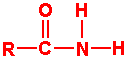
Amides have the general formula, RCONH2 (where R represents any group of carbon and hydrogen atoms). They are acid derivatives (look at the similarity to a carboxylic acid). |
|
The psychoactive drug LSD (lysergic acid N,N-diethylamide) is a well-known amide.
Amides are named using the suffix -amide, giving names of the form alkanamide. The carbon atom of the amide group is part of the longest carbon chain. It is also possible to have an alkyl side chain(s) on the nitrogen atom giving compounds known as N-substituted amides.
Examples
|
|
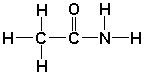
This molecule has two carbon atoms in the carbon chain, so it is called ethanamide (old name acetamide). |
|
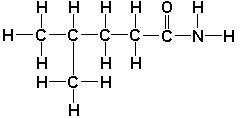
This molecule has five carbon atoms in the chain, with a methyl side chain. It is called 4-methylpentanamide. Note that the amide carbon is considered to be carbon number 1 (we do not count from the other end in order to give a smaller number). |
|
|
|
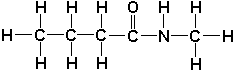
This is an N-substituted amide. It is butanamide with a methyl group replacing one of the hydrogen atoms on the nitrogen. It is called N-methylbutanamide. |
We do not meet many reactions of the amides at "A" Level. They are not particularly reactive and the hydrolysis reaction is very slow. The reaction with aqueous sodium hydroxide is much faster, producing the sodium salt of the parent carboxylic acid and ammonia gas. For example, with ethanamide:
|
CH3CONH2(aq) + NaOH(aq) ⇒ CH3COONa + NH3 |