ISSR CLASSES
Checkpoint Science
iGCSE Chemistry
iGCSE Physics
iGCSE Coordinated Science
A-Level Chemistry
PRACTICALS
Practicals Home
Practicals A-Z
Study Plan for Practical Work
These are faster than ordinary pipettes and don't need a filler, but they are much more expensive.
|
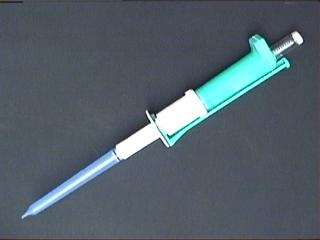
These are available in fixed volume and adjustable volume varieties. They generally have disposable plastic tips which can be ejected after use. The plunger at one end is depressed until the first stop is reached. Then the disposable tip is placed under the liquid level with the pipette vertical. The plunger is steadily released and the liquid volume is drawn up into the disposable tip. The liquid can now be transferred to another vessel. The tip should be placed at 45 degrees to the glass and the plunger depressed steadily until the second stop is reached. |
|
|
|
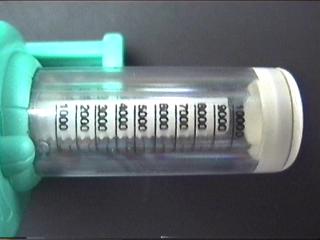
Different models of adjustable pipette have different methods of adjusting the volume delivered. Some have a simpler digital readout of the volume. The one shown in the photograph works by rotating the plunger. A mark on the plunger matches with a mark on the body and indicates an exact volume. The pipette on the left is marked in microlitres (1000 ml = 1 cm3). |
Used properly, autopipettes give good results. However, I find that it takes more practice to obtain such good results than it does with an ordinary glass pipette. It is important to use the correct tip and not to overfill the autopipette as this can damage the mechanism.