ISSR CLASSES
Checkpoint Science
iGCSE Chemistry
iGCSE Physics
iGCSE Coordinated Science
A-Level Chemistry
PRACTICALS
Practicals Home
Practicals A-Z
Study Plan for Practical Work
|
|
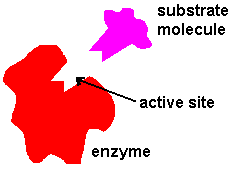
An enzyme is a biological catalyst. It speeds up the rate of a biochemical reaction. They are large protein molecules with complex three-dimensional structures. The long protein chain is curled up, held together by hydrogen bonds. Within this structure an active site is found. The active site has just the right shape to fit part of the substrate molecule (the one which is being catalyzed). When the substrate molecule is fitted into the active site, its bonds are weakened and the activation energy for the reaction is consequently lowered. The performance of an enzyme is very sensitive to changes in pH and temperature. Whilst reaction rate increases with temperature like any other reaction, beyond a certain optimum temperature the reaction rate decreases. This is because the weak intermolecular bonds are disrupted at higher temperatures, changing the shape of the enzyme molecule and affecting the active site. They are also very substrate specific. The substrate molecule has to have an exact fit in the active site, so even very similar-looking molecules may not be catalyzed by the enzyme. |
|
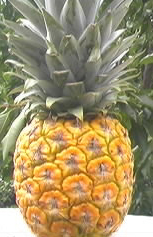
Enzymes are named using the ending -ASE. Amylase is an enzyme found in saliva which acts on starch. Lipase is an enzyme which catalyzes the break down of fats (lipids). Protease catalyzes the breakdown of proteins. The pineapple contains a powerful protease enzyme. As a result pineapple pickers can get damaged hands, as the enzyme speed up the breakdown of proteins in the skin. These types of enzyme are found in biological washing powders as they break down fat (eg. butter) and protein (eg. blood) stains. |
|