ISSR CLASSES
Checkpoint Science
iGCSE Chemistry
iGCSE Physics
iGCSE Coordinated Science
A-Level Chemistry
PRACTICALS
Practicals Home
Practicals A-Z
Study Plan for Practical Work
Permanent eye damage is the most likely major injury that a student could receive in an "A" level chemistry class. It is, therefore, of the highest importance that proper eye protection is worn. Ordinary glasses do not provide adequate eye protection against chemical or impact damage.
|
|
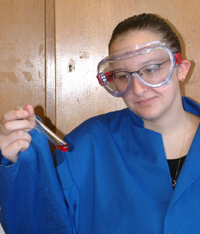
Goggles provide the highest level of protection as they surround your eyes. However, they do have a habit of becoming hot and sweaty and can then limit vision. At this point they tend to stray to foreheads and necks. You can usually adjust the strap on your goggles so that they stay on, but are not too tight. This should save you from the dreaded goggle marks that tend to identify "A" level Chemists as they leave their practical classes. |
|
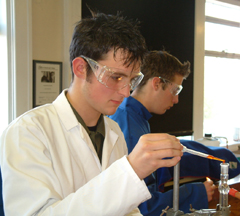
Safety spectacles have the benefit of being much more comfortable, so are more likely to be worn continuously. However, they are more suited to impact rather than chemical protection. It is still possible to get chemical splashes to reach your eyes through the gaps. This is unlikely, but you should be aware of the possibility. |
|
Often students remove their eye protection when they start to clear up, but this is one of the most likely times that chemical splashes will occur. Slightly safer are those students that remove their eye protection once they have finished. Have a look around - are your neighbours still doing practical work, and do you trust them with your eyesight? I have seen a student experiment in which a mixture containing boiling, concentrated nitric acid projected several metres across the lab. Fortunately, through skill or luck, the boiling tube was not pointing in anyone's direction.