ISSR CLASSES
Checkpoint Science
iGCSE Chemistry
iGCSE Physics
iGCSE Coordinated Science
A-Level Chemistry
PRACTICALS
Practicals Home
Practicals A-Z
Study Plan for Practical Work
|
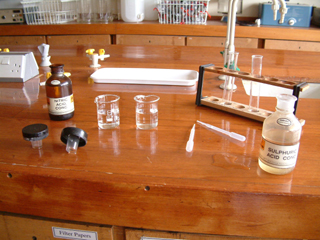
Having a neat and organized approach to your work has a number of advantages. It decreases the likelihood of an accident and increases the speed of work. It also gives your teacher (or employer) a good impression of your work. The photograph shows a disastrous bench area. You should be able to spot all the mistakes. If not, you should find some clues below. |
|
Pouring from bottles causes several difficulties. It is good general practice to pour away from the label on the bottle. This has two advantages. It limits damage to the label and it means that any drips on the bottle should be opposite the label. If everyone else follows the same practice then the bottle will be picked up in an area free of drips.
|
|
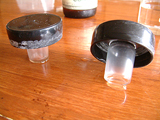
You can't pour from a bottle if it has a top on it. However, it is important what you do with the top. If you must put the top down, always place it on the bench upside down. Otherwise some of the contents of the bottle will end up on the bench, and the top of the bottle will be contaminated by any material from the bench surface. The bottle top should be replaced as soon as you have finished pouring from the bottle. If a bottle is knocked over there is a chance that the contents will remain in the bottle if it has its top on. |
|
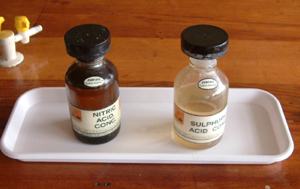
Don't leave bottles or glassware near the edge of the bench. You should have some glass sheets or plastic drip trays in the centre of the bench. These are used for placing your bottles on. Pouring from bottles nearly always leaves drips. This leads to rings of liquid on the bench surface. This can damage the bench and can then get into contact with skin or clothing. |
|
Try to keep your notes and text books clear of your working area. Accidents do happen. The bench is relatively easy to clean up, your notes and books aren't!
|
|
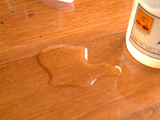
Always clean up any spillages immediately, even if it's only water. Leaving spillages on the bench is very sloppy practice. It encourages people to assume that the spillage is harmless - a very hazardous practice! |
Try to take just enough solution from the stock bottle for your experiment and then throw away any small amount left over. It is generally bad practice to return solutions to the stock bottles, as there is a risk of contamination. The same applies to solids. Some of my students take enough material for the entire group!
|
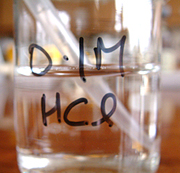
Always label your beakers and test tubes, particularly if they contain colourless liquids. Being unsure which is which may give you the wrong results, may contaminate stock bottles and may be dangerous. If you want to keep a sample, make sure you label the sample bottle clearly with the chemical's name, your name and the date. |
|
|
|
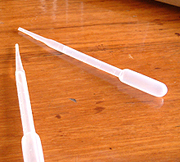
Be careful with dropping pipettes. If you mix them up you will contaminate the bottles that they are next used in. Placing a used dropper onto the bench surface will transfer liquid onto the bench. Keep them in a drip tray or, preferably, in a separate beaker. |
Always rinse your apparatus out before returning it for washing unless specifically asked not to. Leaving traces of dangerous chemicals in your glassware is potentially hazardous for the technical staff. If you are asked to do your own cleaning, test tube brushes and washing up liquid make the job a lot easier. Try to clear your bench area as soon as you have finished with an item.
|
Don't use an unsuitable piece of apparatus because you cannot find the right one. Ask your teacher or technician. |
|
Place your stools under the bench (you shouldn't be sitting on them during an experiment). Make sure that the gangways are clear of stools and bags. Don't put coats or other personal belongings on the bench surfaces.
Close drawers and cupboards after use.