ISSR CLASSES
Checkpoint Science
iGCSE Chemistry
iGCSE Physics
iGCSE Coordinated Science
A-Level Chemistry
PRACTICALS
Practicals Home
Practicals A-Z
Study Plan for Practical Work
There are a number of types of gloves which you may wear in Chemistry. They provide protection to the skin from hazardous chemicals like sodium dichromate solution.
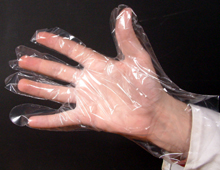
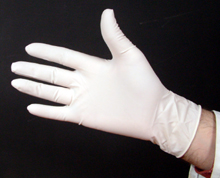
Disposable gloves are available in polythene or latex (like those worn by surgeons). They tend to make your hands hot and sweaty which may make them difficult to remove. A little talcum powder on your hands before use makes them more comfortable.
|
|
|
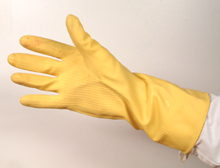
Household rubber gloves are tougher than the disposable ones. Nitrile gloves offer even greater chemical resistance.
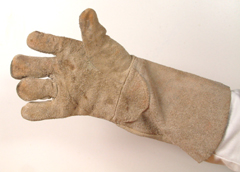
Heat-proof gloves are useful for handling hot objects.
|
|
|
However, don't be too keen to wear them as they can reduce your grip on bottles and may give you a false sense of security. Consequently, spillages are much more likely (over the bottle, gloves and bench). Your hands may be protected to start with, but when the gloves are removed, damage can occur by contact with the earlier spillages.
Each glove material can be attacked rapidly by certain chemicals. So don't assume that there is no risk to your hands just because you have chosen to wear gloves. Proper risk assessment should check that the gloves chosen are compatible with the materials being handled. However, this would not be expected in an "A" level assessment.
Bear in mind that even chemicals like concentrated sulfuric acid, spilt on your hand, will cause little damage if they are washed off immediately. It is better to have no spillages at all, than to spill them over your gloves.