ISSR CLASSES
Checkpoint Science
iGCSE Chemistry
iGCSE Physics
iGCSE Coordinated Science
A-Level Chemistry
PRACTICALS
Practicals Home
Practicals A-Z
Study Plan for Practical Work
|
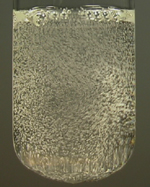
Bubbles of colourless gas produced. The effervescence is clear to see, but did you mention the colour? |
|
|
White precipitate formed. The colour change is fairly obvious, but students often miss out the change of state - that is, the precipitate. It may help to leave it to settle, or use a glass rod to drag some solution up the test tube wall - you should be able to see small particles of solid. |
|
|
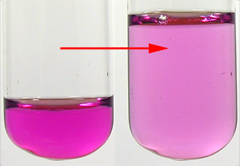
Nothing! Purple solution is diluted. Water was used here to dilute a purple solution of potassium manganate(VII). As it was diluted it became paler in colour, but no chemical change took place. In other reactions the colour may fade due to a chemical reaction. It can be quite difficult to decide whether the lightening of the colour is due only to dilution when mixing two solutions. If in doubt, put equal volumes of the first solution into two test tubes. Now add the second solution to one test tube and an equal volume of water to the other test tube. If the two test tubes appear the same then it is likely that no reaction has taken place. |
|
|
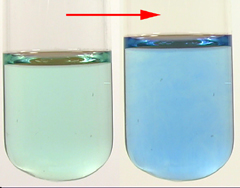
Solution changes from pale green to blue. There is no change of state here, just a colour change. |
|
|
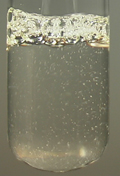
Nothing! Did you make the mistake of saying effervescence? This was just some water squirted into some more water. The bubbles are bubbles of air. Students do mistake this for a reaction. The solution to this problem is to be careful with your addition - if you squirt, you will see bubbles! |
|
|
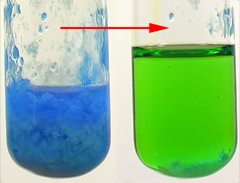
Gelatinous, blue precipitate dissolves and lime green solution forms . The colour change is fairly obvious, but it is surprising the number of students who don't mention the solid dissolving. Gelatinous means like jelly. |
|
Purple solution turns very pale green.
|
No change of state here, and give yourself extra credit if you spotted the very pale green. It's not easy to see on the video, so colourless isn't too far out. |
|
|
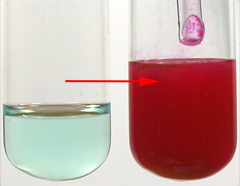
Pale green solution forms red precipitate. The precipitate was made more obvious when the glass rod was used to drag some of the solid particles up the side of the test tube. |
|
|
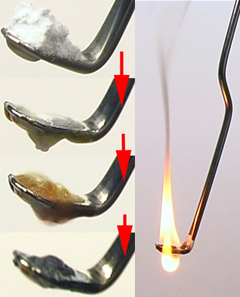
White solid melts, turns brown and then black. It catches fire and burns with a yellow, sooty flame leaving a black solid residue. A bit more to spot here - but still done in two sentences. |
|
|
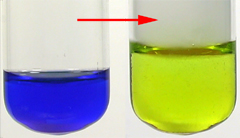
Royal blue solution turns to green-yellow solution. A white smoke is produced above the solution. The smoke is a fine solid. |
|