ISSR CLASSES
Checkpoint Science
iGCSE Chemistry
iGCSE Physics
iGCSE Coordinated Science
A-Level Chemistry
PRACTICALS
Practicals Home
Practicals A-Z
Study Plan for Practical Work
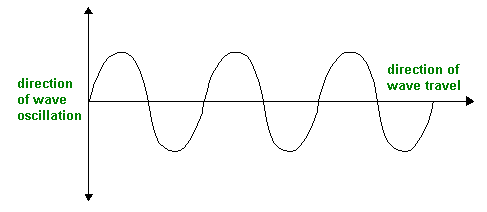
In order to deal with this topic we must first understand the concept of plane polarised light. Visible light is part of the electromagnetic spectrum, it is a transverse wave like the waves on the sea:
|
|
a transverse wave |
|
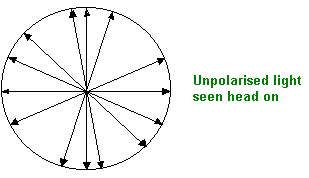
In ordinary light (from the Sun or a light bulb) these waves oscillate (vibrate) in all possible planes. Seen head on: |
|
|
|
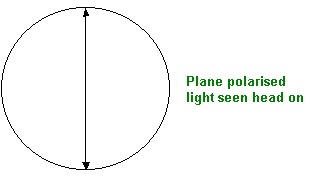
However, if this light is passed through certain materials like Polaroid plastic only light passing through in one plane is allowed to pass. |
The resulting light is said to be plane polarised. We can check if light is plane polarised by using another sheet of Polaroid plastic. If this is aligned with the plane polarised light then it can pass through it, but if it is at ninety degrees to it, then no light passes through - this is used to check the plane of polarisation. If the Polaroid plastic is rotated between these two extremes then varying amounts of light will pass through it.
Certain molecules are said to be chiral:
|
A chiral molecule is one which has a non-superimposable mirror image. The most common source of chirality is a carbon atom which has four different groups attached to it. |
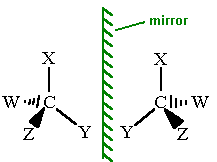
You may be asked to sketch a diagram like the one above in an exam. Make sure you use the wedges to indicate the three dimensional arrangement. Students often draw the molecules as flat, but these would be superimposable, and so not chiral. Whilst any molecule which is not superimposable on its mirror image is chiral, at "A" level it is nearly always the carbon atom with four different groups which you will have to look for.
|
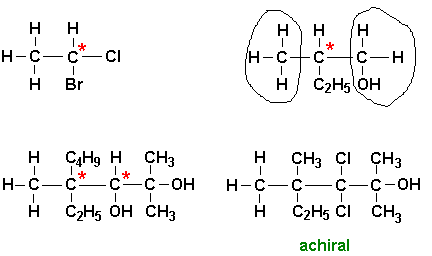
Note that it is the entire group which is attached to the carbon atom that we are looking at, not just the first atom. The carbon atom with the four different groups is said to be the chiral centre and is marked with an asterisk. Some examples should make this clear: |
|
The circles in the top right molecule show that these are two different groups attached to the central carbon atom. The other two groups are clearly different, and so with four different groups this molecule is chiral. The bottom left example shows that it is possible to have molecules with a number of different chiral centres. Try the chiral centre exercise.
Chiral molecules are optically active, that is they rotate the plane of plane polarised light. One of the isomers will rotate the plane of plane polarised light clockwise. It is said to be dextrorotatory and is labelled with a (+). The mirror image isomer will rotate the plane of plane polarised light anticlockwise. It is said to be laevorotatory and is labelled with a (-). An equal mixture of the (+) and the (-) isomers has no effect on plane polarised light, and is said to be racemic.
|
|
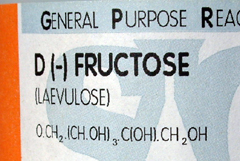
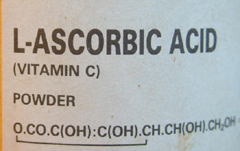
There is also a system to identify the particular isomer in terms of the orientation in space of the four different groups. One is called L- and the other D-. However, this is nothing to do with dextrorotatory and laevorotatory. A D- isomer may be either dextrorotatory (+) or laevorotatory (-); it varies depending on the particular molecule involved. You are not expected to know how to identify an isomer as either L- or D-. |
|
|
When describing this effect in exams always use the full description - chiral molecules rotate the plane of plane polarised light. Some students have a habit of just saying they rotate light - this is wrong, don't do it!
Molecules which are superimposable on their mirror images have no effect on plane polarised light and are said to be achiral.
You will probably use the polarimeter to measure the angle of rotation of plane polarised light by a chiral compound. We only need to measure whether it rotates clockwise or anticlockwise, as the actual amount of rotation depends on a number of factors like concentration, path length and temperature. The two isomers are called optical isomers or enantiomers. Where there is more than one chiral centre more than two enantiomers are possible.