ISSR CLASSES
Checkpoint Science
iGCSE Chemistry
iGCSE Physics
iGCSE Coordinated Science
A-Level Chemistry
PRACTICALS
Practicals Home
Practicals A-Z
Study Plan for Practical Work
Rubber tubing is available in a number of different diameters and wall thicknesses. You may also use plastic tubing.
|
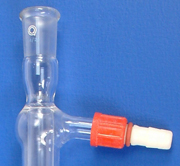
Use the thin-walled tubing for carrying water to a Liebig condenser. Don't use too wide a bore - if it fits on loosely it is likely to come apart during the experiment. Be careful when fitting tight rubber tubing to glass apparatus that you do not break the glass. Most modern fittings are design to unscrew from the glassware, so that the tubing can be fitted without straining the glass. Wetting the internal surface of the rubber tubing with a little water lubricates it and makes fitting much easier. |
|
|
|
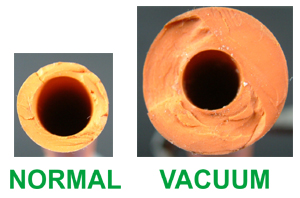
The thick-walled rubber tubing is called vacuum tubing, which you will need to use for suction filtration. The thinner tubing tends to collapse under the low pressure. Be careful with vacuum tubing, and don't use it for ordinary purposes. It is heavy and not very flexible, so it tends to pull over apparatus. |
|
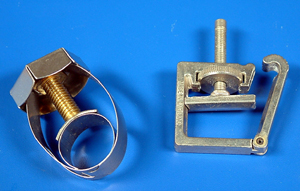
Screw clips can be used for securing tubing, and various adapters are available for joining lengths of tubing. |
|