ISSR CLASSES
Checkpoint Science
iGCSE Chemistry
iGCSE Physics
iGCSE Coordinated Science
A-Level Chemistry
PRACTICALS
Practicals Home
Practicals A-Z
Study Plan for Practical Work
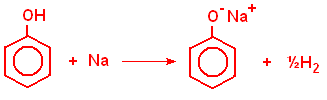
In the reaction with sodium the O-H bond is broken, and we see hydrogen gas bubbling off. The H atom is replaced by a sodium atom. The bond is ionic, with the positive charge on the sodium and the negative charge on the oxygen. In the case of phenol, the ionic compound that forms is called sodium phenoxide:
|
|
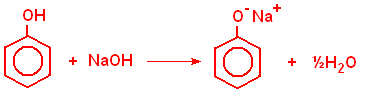
The reaction with sodium hydroxide solution is a simple acid-base one in which an ionic salt, called a phenoxide, and water are formed:
|
|
The phenoxide group is very hydrophilic, as it is ionic. Consequently, phenols will dissolve in sodium hydroxide solution, whereas their solubility in water is usually limited. On addition of a strong acid, like hydrochloric acid, the weak phenolic acid is regenerated and, being sparingly soluble, it precipitates out of solution. This could be seen in the video.
The video shows that no carbon dioxide gas was evolved when the phenol was added to sodium carbonate solution. Care needs to be taken here, students often confuse air bubbles formed on mixing with effervescence. A good sign that no gas is being evolved in this reaction is the observation that the solid particles sink to the bottom of the solution. If gas were being evolved around the solid particles its buoyancy would cause the solid to rise. Most phenols, including phenol itself, are much weaker acids than carbonic acid, and consequently do not react with sodium carbonate solution releasing carbon dioxide gas. Some phenols, however, can be much stronger acids and would, therefore, react with sodium carbonate solution.