ISSR CLASSES
Checkpoint Science
iGCSE Chemistry
iGCSE Physics
iGCSE Coordinated Science
A-Level Chemistry
PRACTICALS
Practicals Home
Practicals A-Z
Study Plan for Practical Work
|
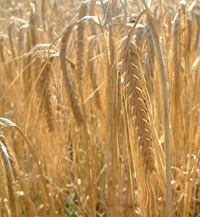
If you are not confident with simple titration work, check this section out first. It is probably easiest to illustrate the principle of a back titration by using an example. The kjeldahl method is used to measure the amount of nitrogen present in an organic substance. Nitrogen is present mainly in proteins. Good malting barley, used for the production of beer, contains less than 1.5% nitrogen. In the kjeldahl method a sample of barley is ground up and digested by heating it in an unpleasant mixture of concentrated sulfuric acid and selenium catalyst. This releases the nitrogen from various compounds as ammonia gas. |
|
|
|
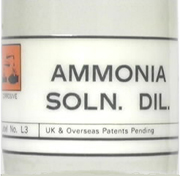
In a simple titration we could collect the ammonia in water (in which it is very soluble) and titrate the resulting solution using a standard solution of hydrochloric acid. However, ammonia in ammonia solution has a tendency to escape (try taking the top of a bottle of dilute ammonia solution and smell carefully - do you think any ammonia is escaping!). A better method is to carry out a back titration. The ammonia gas is first dissolved in a known excess of sulfuric acid (see how here). This converts it into ammonium sulfate, and so traps the ammonia. The excess acid remains, and this is finally titrated using standard sodium hydroxide solution. |
A moles calculation lets us work out how much acid was left over (this is exactly the same as a normal titration calculation). Another moles calculation gives us the number of moles of acid which we started with. As we know how much acid we started with and how much was left at the end, the difference must have been the amount of acid which has reacted with the ammonia. From then on, the calculation is exactly the same as any other titration calculation.
As with all calculations, it is easiest to learn from an example. I'll work through an example below and then give you two further examples to have a go at.
A 1.400 g sample of dry, ground barley was digested and the resulting ammonia absorbed into 50.0 cm3 of 0.0200 M sulfuric acid. The remaining acid produced a 9.05 cm3 titre with 0.0400M sodium hydroxide solution. Would this sample pass the brewery specification of a maximum of 1.70% nitrogen by mass?
Number of moles of sodium hydroxide = 9.05 × 0.0400/1000 = 3.62 × 10⁻⁴
|
2NaOH(aq) + H2SO4(aq) ⇒ Na2SO4(aq) + 2H2O(l) |
\ Number of moles of H2SO4 titrated = ½ × 3.62 × 10-4 = 1.81 × 10⁻⁴
Number of moles of H2SO4 initially used = 0.0200 × 50.0/1000 = 1.00 × 10⁻³
\Number of moles of H2SO4 reacted with ammonia = 1.00 × 10⁻³ - 1.81 × 10-4 = 8.19 × 10⁻⁴
|
2NH3(g) + H2SO4(aq) ⇒ (NH4)2SO4(aq) |
\ Number of moles of ammonia = 2 × 8.19 × 10-4 = 1.64 × 10⁻³
\ Mass of nitrogen = 1.64 × 10-3 × 14 = 0.0230 g
\ Percentage of nitrogen = 0.0230/1.400 × 100 = 1.64%
This passes the brewery specification.
Still not sure how it was done? Look at the more detailed calculation.