ISSR CLASSES
Checkpoint Science
iGCSE Chemistry
iGCSE Physics
iGCSE Coordinated Science
A-Level Chemistry
PRACTICALS
Practicals Home
Practicals A-Z
Study Plan for Practical Work
The pH meter
This device measures the potential difference of a specially constructed electrode in order to measure the pH of an aqueous solution. The principle of operation is not particularly important at this stage of the course, but you might want to research it.
|
|
|
|
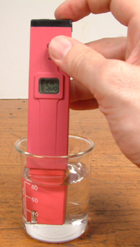
It is important that you can use a pH meter in practical. There are a variety of designs of pH meter that you may meet, but the one we shall use in the video is typical of many. Always keep the pH electrode moist by placing it in a small beaker of distilled water. The meter will first need to be standardized. We need a solution of known pH in order to check the value being read by the meter. You might think water would be ideal, but it is difficult to guarantee its pH. Tap water is often alkaline due to dissolved minerals, and distilled water is often acidic due to dissolved carbon dioxide gas from the air. We use a pH 7 buffer solution which resists change in pH. |
A buffer solution is one that resists change in pH when small amounts of acid or alkali are added to it. So we can be fairly sure of its pH. The pH electrode is placed in a beaker of pH 7 buffer, making sure that the buffer covers the end (3 cm) of the electrode. The pH meter is turned on and allowed to settle whilst swirling the solution gently. The meter is then adjusted (by a knob or button) until it reads pH 7. The electrode is removed from the buffer and rinsed thoroughly with distilled water from a wash bottle. The electrode can now be placed in the solution to measure its pH. Rinse the electrode thoroughly between readings (unless you are measuring a sequence of pHs for the same solution). Keep the electrode in a beaker of distilled water when not in use. You may want to check the meter occasionally by using the buffer solution again.
With more accurate work the pH meter will be set against a second buffer of different pH (usually pH 4.0). The pH meter may or may not have some adjustment for the temperature of the solution - your teacher will demonstrate your particular meter.