ISSR CLASSES
Checkpoint Science
iGCSE Chemistry
iGCSE Physics
iGCSE Coordinated Science
A-Level Chemistry
PRACTICALS
Practicals Home
Practicals A-Z
Study Plan for Practical Work
| halide | hydrogen halide? |
halogen? |
sulphur dioxide? |
hydrogen sulphide? |
|
chloride |
hydrogen chloride |
NO |
NO |
NO |
|
bromide |
hydrogen bromide |
bromine |
YES |
NO |
|
iodide |
hydrogen iodide |
iodine |
YES |
YES |
As sulfuric acid is an acid, and therefore a proton donor, it should give up hydrogen ions to the halide ions to form the hydrogen halide gases. This is in fact what occurs, but as concentrated sulfuric acid is also a powerful oxidizing agent further reaction is possible. Hydrogen chloride is not easily oxidized, so the reaction between concentrated sulfuric acid and potassium chloride produces only this gas (the reaction with sodium chloride is the standard method for preparing hydrogen chloride gas):
|
H2SO4(aq) + KCl(s) ⇒ KHSO4(aq) + HCl(g) |
|
|
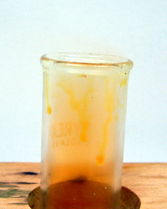
Similar reactions occur with the potassium bromide and potassium iodide, but the hydrogen bromide and hydrogen iodide gases produced are oxidized to their elements by the concentrated sulfuric acid. You should have seen the orange-brown bromine vapour and dark brown iodine in the video. |
|
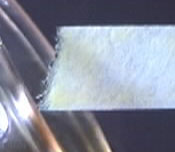
As the hydrogen halides have been oxidized, the sulfuric acid must have been reduced. The reduction of sulfuric acid produces the gases sulphur dioxide and hydrogen sulphide. You should have seen in the video that the potassium dichromate paper was turned from orange to green by the products of both the reactions of the bromide and iodide. This indicates that both these reactions produced sulphur dioxide gas. |
 |
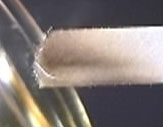 |
Only the products of the reaction with the iodide blackened the lead(II) ethanoate paper, showing the presence of hydrogen sulphide gas. This is because the iodide is the strongest reducing agent and manages to reduce the sulphur in the sulfuric acid to the - 2 oxidation state. |
These last two reactions lead to a complicated mixture of products so equations have not been shown.