ISSR CLASSES
Checkpoint Science
iGCSE Chemistry
iGCSE Physics
iGCSE Coordinated Science
A-Level Chemistry
PRACTICALS
Practicals Home
Practicals A-Z
Study Plan for Practical Work
Making scientific glassware involves great skill and experience. You are unlikely to do much glass work yourself, but there are some minor procedures that you should be aware of.
|
|
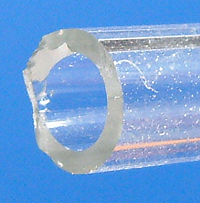
Flame polishing involves heating a sharp piece of glass (maybe a chipped beaker) strongly in a Bunsen flame. The glass softens and becomes smooth so that it can no longer cause cuts. Always beware of any chipped glassware - don't assume that it has been made safe. |
|
Cutting a length of glass tubing is best done using a tube cutter. This contains a diamond point which scores around the diameter of the tube. When the tube is bent about this point it should snap cleanly. Protective gloves and eye protection should be worn when snapping the tube. The sharp, cut ends of the tube are then flame polished. |
|
|
|
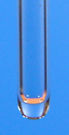
Sealing the end of a tube is necessary in melting point work. This is similar to flame polishing. The very end of the tube is heated strongly in the Bunsen flame. The softening process is taken further, by continued heating, than in flame polishing. The tube needs to be rotated to prevent it drooping. You should see when the end of the tube has been sealed. |
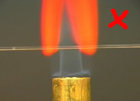
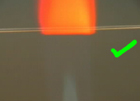
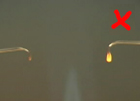
Making a glass dropping pipette. We usually use melting point tubes, but the same technique can be used for thicker tubing. The centre of the tube is placed in a Bunsen flame above the inner blue cone. It needs to be rotated until it becomes quite soft and droopy. It is then removed from the flame and quickly pulled apart until the required length is achieved. Two pipettes are made by bending and snapping the glass at its narrow point (eye protection needed!). A number of difficulties arise when students first try this technique. If the tube is placed in the inner blue cone it will not melt in the middle (remember this section is unburnt gas). If the tube is pulled apart in the flame, it will come apart and both ends will seal. If it is not pulled apart immediately that it comes out of the flame it will harden and not stretch.
 |
 |
 |
Bear in mind that glass, particularly thin bits of glass, are hazardous. Don't leave your glass on the bench - it should all be placed in a designated glass bin.