ISSR CLASSES
Checkpoint Science
iGCSE Chemistry
iGCSE Physics
iGCSE Coordinated Science
A-Level Chemistry
PRACTICALS
Practicals Home
Practicals A-Z
Study Plan for Practical Work
|
|
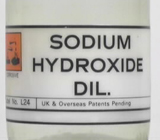
An alkali is a soluble base. The common laboratory alkalis are sodium hydroxide, potassium hydroxide and ammonia solution. They produce hydroxide ions in solution, and so turn litmus paper blue. Sodium hydroxide and potassium hydroxide are strong alkalis as they ionize completely in solution, giving high concentrations of hydroxide ions (assuming the original alkali concentration was high): |
|
NaOH(aq) + aq ⇒ Na+(aq) + OH-(aq) |
Ammonia is a weak alkali as it only partially ionizes in aqueous
solution. The reaction is reversible and produces a relatively low
concentration of hydroxide ions.
|
NH3(aq) +
H2O(l) |
Alkalis are corrosive and great care should be taken when using them. Drips from sodium hydroxide solution bottles will attack wooden bench surfaces. Alkali on the skin causes fats and oils to break down into soaps, giving a soapy feel. This should be washed off immediately. The use of gloves is sensible when handling concentrated alkali solutions or solids.
Sodium hydroxide solution is used as a drain cleaner, and ammonia solution is present in a number of domestic cleaners.

 NH4+(aq) +
OH-(aq)
NH4+(aq) +
OH-(aq)