ISSR CLASSES
Checkpoint Science
iGCSE Chemistry
iGCSE Physics
iGCSE Coordinated Science
A-Level Chemistry
PRACTICALS
Practicals Home
Practicals A-Z
Study Plan for Practical Work
|
These are made of rubber and come in various sizes. The size is marked on the bung in millimetres. They are often used to seal test tubes and conical flasks so that the contents can be shaken. If glass tubing is to be put through the bung, a cork borer can be used, or bungs can be purchased pre-bored. |
|
|
|
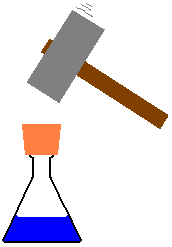
Never use your thumb over the end of a test tube, even if you think the contents are harmless. This has led to a number of accidents in the past. Also be careful not to force a bung into glass apparatus. I have seen students putting considerable weight behind a bung they were trying to force into a conical flask. If the glass breaks (which is quite likely) the force used will drive your hand into the broken glass. This will be very messy and very painful! |
|
The bung should fit in easily, but beware of using a bung which is a fraction too small - it will drop into the test tube and can be very difficult to remove. |
|
You may be asked to draw a diagram of apparatus containing a bung. This is often done badly and loses marks in exams. Check the advice in the drawing apparatus section.