ISSR CLASSES
Checkpoint Science
iGCSE Chemistry
iGCSE Physics
iGCSE Coordinated Science
A-Level Chemistry
PRACTICALS
Practicals Home
Practicals A-Z
Study Plan for Practical Work
|
|
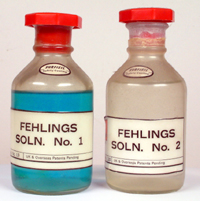
This is an alternative to Benedict's solution. It is used to distinguish between aldehydes and ketones. The solution has to be made up freshly before use. It is found in the laboratory in two bottles marked Fehling's A and Fehling's B (or sometimes Fehling's 1 and Fehling's 2). Roughly equal volumes of these solutions are mixed before use. Fehling's A is copper(II) sulfate solution. Fehling's B is highly alkaline (take care!), and also contains sodium potassium tartrate to prevent the precipitation of copper(II) hydroxide on mixing. |
|
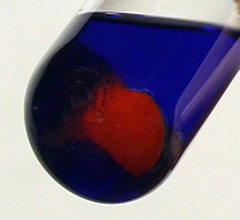
When a few drops of aldehyde are added to the freshly made Fehling's solution and warmed in a water bath a brick red precipitate of copper(I) oxide is formed. I find Fehling's solution to be more reliable than Benedict's solution. The video below shows the reaction of Fehling's solution with glucose , a reducing sugar which contains an aldehyde group. Aldehydes, like propanal, give a less distinct change, but the brick red copper(I) oxide is still quite clear in the test tube after reaction. |
|
The chemistry behind the test is the ready oxidation of the aldehyde to a carboxylic acid. When the aldehyde is oxidized, the alkaline Cu2+ ion is reduced to the brick red copper(I) oxide. You might also like to look at the silver mirror test.