ISSR CLASSES
Checkpoint Science
iGCSE Chemistry
iGCSE Physics
iGCSE Coordinated Science
A-Level Chemistry
PRACTICALS
Practicals Home
Practicals A-Z
Study Plan for Practical Work
This first experiment will test your observation skills, equation writing and ability to work with moles.
You will be carrying out a number of thermal decomposition reactions. This is the term given to the process in which a compound breaks down on heating. All compounds will decompose if heated strongly enough, but some are stable to temperatures well above that which can be achieved by a Bunsen burner.
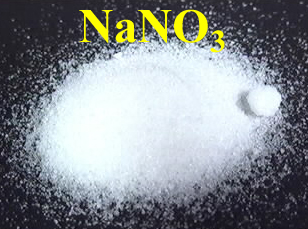
The changes which occur on heating a compound can give us good clues as to its identity. There are four common thermal decompositions studied at "A" level. First check the table of simple chemical tests for gases. Then watch the videos which show the effect of heating various compounds. Try to identify any gases that are given off in each case. See if you can write down a balanced chemical equation for the thermal decomposition reactions which occur. Try to work out what mass of solid residue should be made if we start with exactly 5 grams of the starting material. You can check your answers by clicking on the theory links. Clicking on the compound name shows a picture and the correct chemical formula.
This experiment must be carried out in a fume cupboard as a toxic gas is produced.
This is a popular demonstration which uses the reaction between aluminium and iron(III) oxide. As aluminium is more reactive than iron, a displacement reaction takes place. Write down the balanced equation for the reaction and use it to calculate the amount of iron required to react with exactly 100 grams of iron(III) oxide. Check your answer here. The reaction is highly exothermic and produces molten (liquid) iron. In the video I have used the molar quantities shown in the equation.